

Solar Market Studies: Where Solar Pays Best in 2026
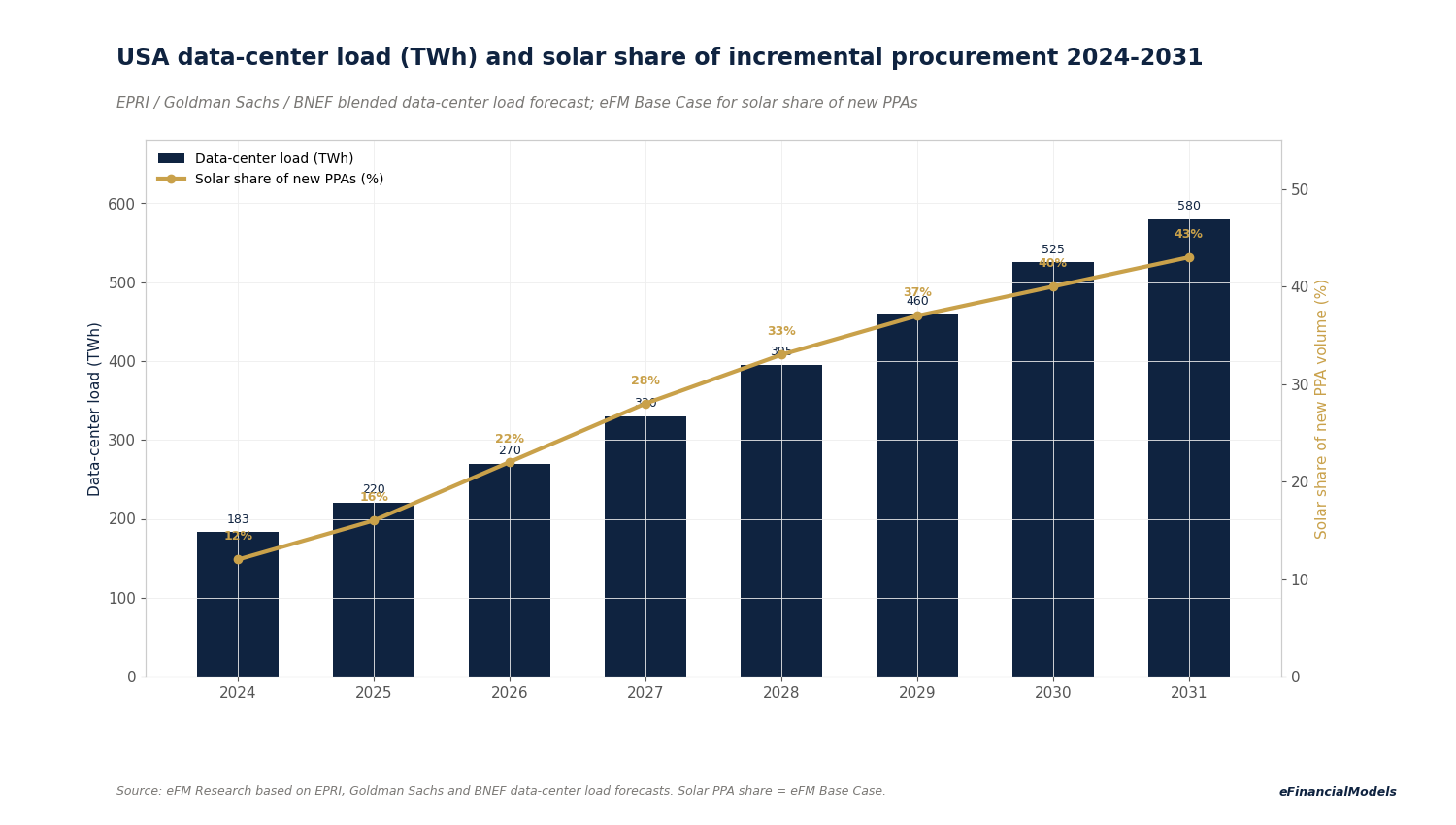
U.S. data-center load is set to more than triple to 580 TWh by 2031, with solar's share of new power-purchase agreements climbing from 12% to 43% — one of the demand signals our studies forecast through 2026–2031.
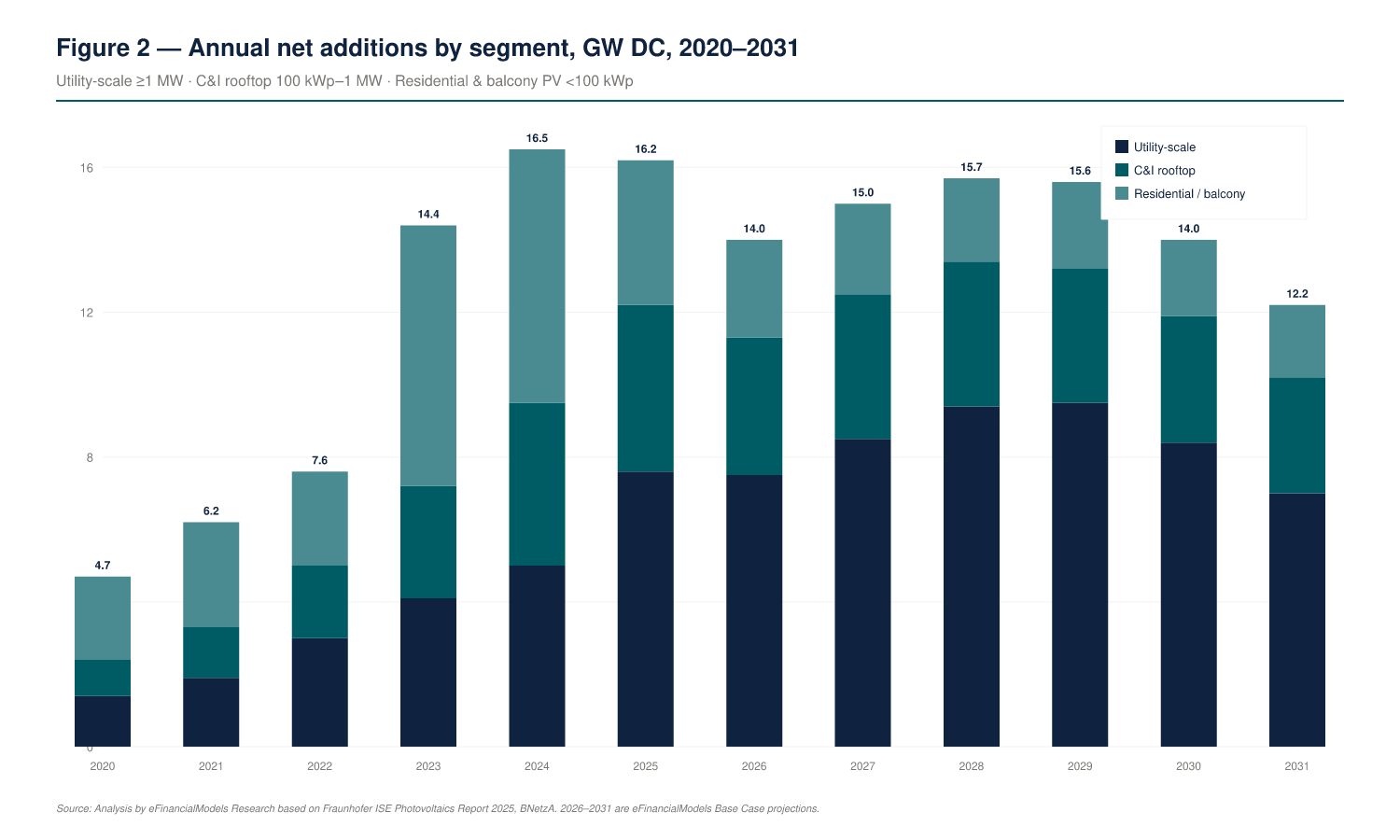
Germany is projected to add 12–16 GW of solar every year through 2031 across utility-scale, commercial rooftop and residential/balcony PV — part of the 2026–2031 outlook in each study.
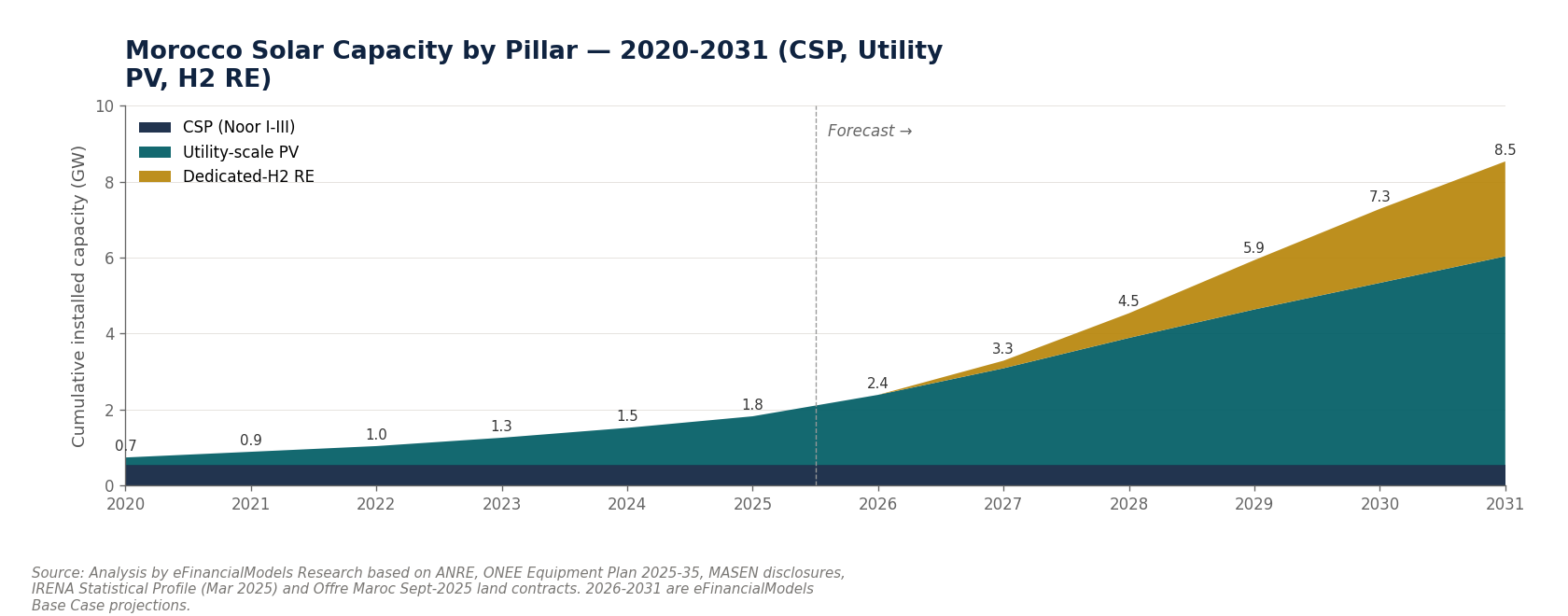
Morocco's solar capacity is projected to grow nearly five-fold to 8.5 GW by 2031, split across CSP, utility-scale PV and an emerging green-hydrogen pillar — covering the 2026–2031 horizon our studies model.
New 2026 to 2031 Solar Market Studies span nine leading markets: record installations, falling capture prices, and wider variation in returns.
Covering nine of the world's leading solar economies, the studies document changes in how solar revenue is captured as installed capacity rises. In several saturated grids, additional capacity coincides with lower midday wholesale prices. In one leading European market, the studies report that solar's capture rate, the share of the wholesale price that solar receives, declined from 82% in 2020 to as low as 26% by early 2026. In congested zones of the world's largest market, the studies note that curtailment, or power that is generated but not sold, has exceeded 30%. According to the studies, project revenue rather than build cost is becoming the primary variable in determining returns.
According to eFinancialModels Research, "For much of the past decade, falling costs and rising demand supported a build-as-much-as-possible approach. Over the next five years, our studies indicate outcomes are likely to vary more widely between markets, depending on capture rates, grid access, and how offtake is structured. The studies are intended to help teams assess those differences before they commit capital."
KEY FINDINGS ACROSS THE STUDIES
Across the markets covered, the studies identify several factors that influence project returns:
• Capture-price erosion: In markets where solar makes up a large share of midday supply, the studies report that midday wholesale prices decline, which can reduce projected lifetime revenue relative to earlier assumptions.
• Curtailment: The studies identify transmission capacity, rather than panel cost, as a growing constraint, noting that curtailment can affect equity returns in the most congested zones.
• Storage: The studies find that pairing solar with battery storage and selling into higher-priced hours is associated with stronger project viability in several markets.
• Offtake structure: The studies note that auctions, contracts-for-difference, and corporate power-purchase agreements provide more revenue stability than merchant exposure.
• Policy timing: The studies report that tax-credit schedules, local-content requirements, and pricing reforms affect project timing differently across markets.
The studies provide market-by-market analysis intended to help entrepreneurs, developers, and investors evaluate solar opportunities on a comparable basis. Readers can find the full series in the Market Studies library.
Editor's note: The eFinancialModels Solar Market Studies 2026 to 2031 series covers nine solar markets across Asia, Europe, North America, Africa, and Australia, selected for the scale of their build-out and the depth of their investment activity.
Communications Team eFinancialModels
eFinancialModels
info@efinancialmodels.com
Visit us on social media:
LinkedIn
Bluesky
Instagram
Facebook
YouTube
TikTok
X
Legal Disclaimer:
EIN Presswire provides this news content "as is" without warranty of any kind. We do not accept any responsibility or liability for the accuracy, content, images, videos, licenses, completeness, legality, or reliability of the information contained in this article. If you have any complaints or copyright issues related to this article, kindly contact the author above.
