

Solar studies show profits hinge more on location than build cost
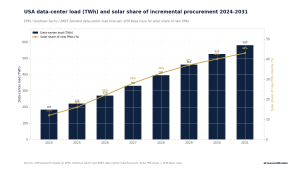
eFinancialModels says its new 2026-to-2031 solar market studies find that rising capacity is pressuring wholesale prices, curtailment and capture rates across nine major markets. The takeaway: project returns are becoming more dependent on grid access, offtake structure and timing than on simply adding more solar.
Why it matters: - eFinancialModels says solar added more than 600 gigawatts of new capacity worldwide in 2025, making it the largest installed power source globally. - The new studies suggest solar project economics are shifting from a build-focused model to a revenue-focused one. - That change matters for developers, investors and entrepreneurs weighing where solar can still deliver strong returns.
What happened: - eFinancialModels released Solar Market Studies 2026 to 2031 covering nine leading solar markets. - The studies are available in the platform’s Market Studies library. - The series spans markets across Asia, Europe, North America, Africa and Australia. - The markets were selected for the scale of their build-out and the depth of their investment activity.
The details: - In several saturated grids, added capacity is pushing midday wholesale prices lower. - In one leading European market, solar’s capture rate fell from 82% in 2020 to as low as 26% by early 2026. - In congested zones of the world’s largest market, curtailment has exceeded 30%. - The studies say project revenue is becoming the main variable in determining returns. - The studies identify capture-price erosion as a drag on projected lifetime revenue in markets where solar already supplies a large share of midday power. - The studies flag transmission capacity as a growing constraint, with curtailment affecting equity returns in the most congested zones. - The studies find that pairing solar with battery storage and selling into higher-priced hours improves project viability in several markets. - The studies say auctions, contracts-for-difference and corporate power-purchase agreements offer more revenue stability than merchant exposure. - The studies also note that tax-credit schedules, local-content requirements and pricing reforms affect project timing differently across markets. - eFinancialModels Research said the studies are intended to help teams assess market differences before committing capital. - eFinancialModels Research said outcomes over the next five years are likely to vary more widely between markets depending on capture rates, grid access and offtake structure.
Between the lines: - The core risk in solar is shifting from equipment and installation cost to market design and grid constraints. - Markets with strong build-out can still produce weaker economics if too much generation lands in the same low-price hours. - Storage and contracted revenue streams are becoming more important tools for protecting project returns.
What’s next: - Developers and investors will likely use the studies to compare market opportunities on a like-for-like basis. - The results point to more selective capital deployment, especially in markets with weak capture prices or high curtailment. - Future project planning may tilt toward storage, stronger offtake contracts and markets with better grid access.
The bottom line: - Solar growth is no longer enough on its own; where power is sold will matter more than ever.
Disclaimer: This article was produced by AGP Wire with the assistance of artificial intelligence based on original source content and has been refined to improve clarity, structure, and readability. This content is provided on an “as is” basis. While care has been taken in its preparation, it may contain inaccuracies or omissions, and readers should consult the original source and independently verify key information where appropriate. This content is for informational purposes only and does not constitute legal, financial, investment, or other professional advice.
Sign up for:
Power Grid Today
The daily local news briefing you can trust. Every day. Subscribe now.
Check Your Email!
We sent a one-time activation link to: .
Confirm it's you by clicking the email link.
If the email is not in your inbox, check spam or try again.
Welcome back!
is already signed up. Check your inbox for updates.